Descend into the world's largest intact volcanic caldera, home to the highest density of large predators on Earth. Our ultimate guide to the Ngorongoro Crater covers the incredible wildlife, the best time to visit, and stunning crater rim lodges.
Two and a half million years ago, a volcano the size of Kilimanjaro erupted so violently that its entire cone collapsed inward, creating a caldera 260 square kilometres wide and 600 metres deep. Over the millennia that followed, this crater became self-contained, fertile, and extraordinarily rich with life. Today, the Ngorongoro Crater is home to the highest concentration of large predators anywhere on Earth.
What Is the Ngorongoro Crater?
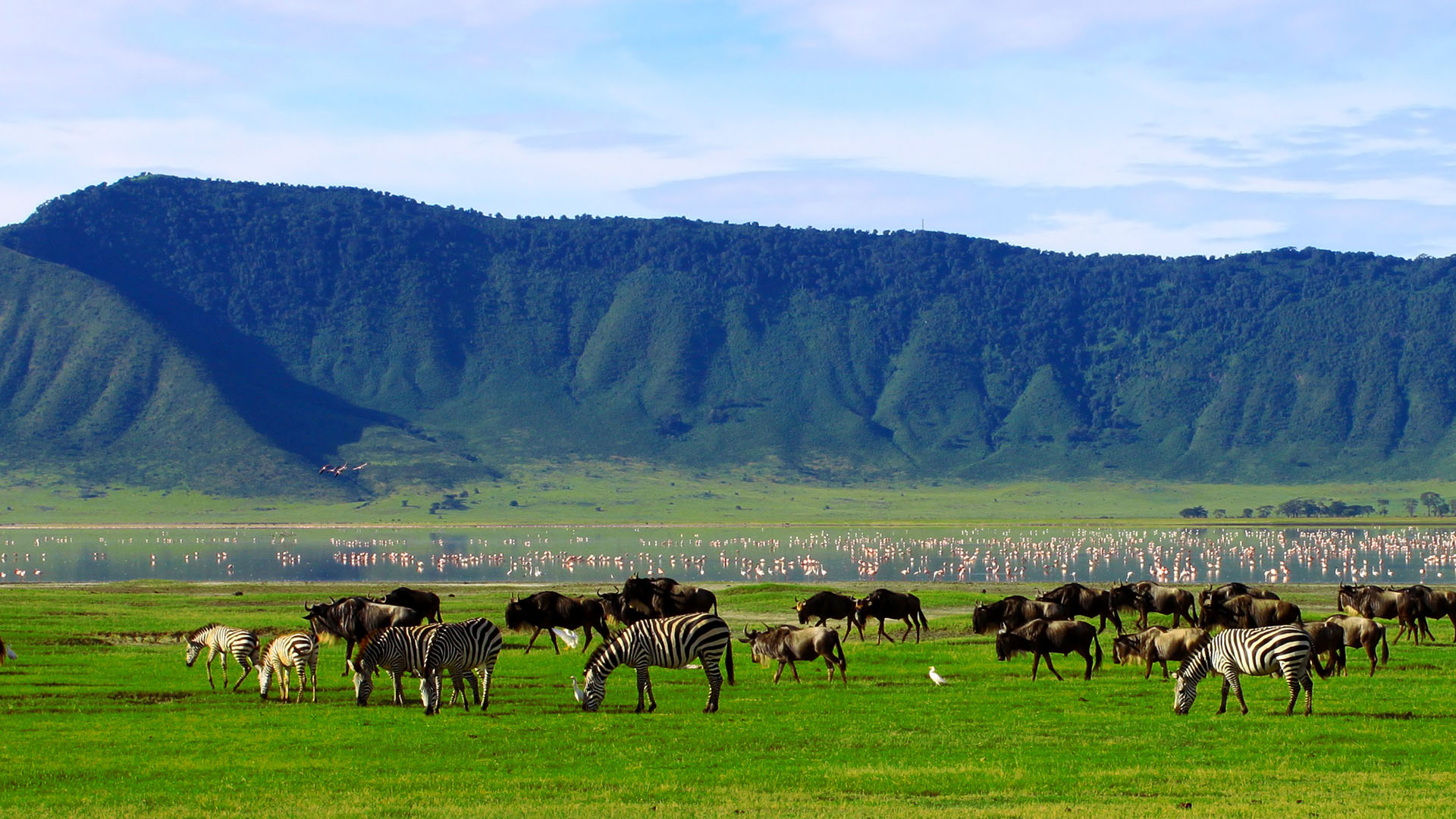
The Ngorongoro Crater is the world's largest intact volcanic caldera. It sits within the Ngorongoro Conservation Area, a UNESCO World Heritage Site in northern Tanzania. What makes the Ngorongoro Crater so extraordinary from a wildlife perspective is its natural enclosure. The crater floor is essentially a self-sustaining, year-round ecosystem with permanent fresh water sources and abundant grazing.
In all our years of operating Tanzania safaris, we have never had a client descend into the Ngorongoro Crater and not see lions. The resident pride has nowhere to go — they are contained within 260 square kilometres — and experienced guides know their patrol routes with remarkable precision.
The Wildlife of the Ngorongoro Crater
Black Rhinoceros: The Ngorongoro Crater is one of the last places in East Africa where you have a realistic chance of encountering wild black rhinoceros. Approximately 20 to 30 individuals are thought to live on the crater floor.
Elephants: The crater elephants are notably large because they are not hunted. Most are old males with extraordinarily long tusks that graze the forested crater walls.
The Big Five: All of the big five are present in the crater: lion, leopard (rarer, found on the forested walls), elephant, black rhino, and buffalo. Cheetah, hyena, and thousands of wildebeest and zebra complete a truly remarkable wildlife inventory.
Add Ngorongoro to Your Tanzania Safari
The crater combines perfectly with the Serengeti and a Zanzibar beach extension into one of Africa's finest itineraries.
Practical Logistics: Getting in and Out
The crater can only be entered and exited via designated roads. Descents are permitted from around 7:00 in the morning and all vehicles must exit the crater by 6:00 in the evening — you cannot overnight on the crater floor. Day trips are conducted from lodges and camps on the crater rim, many of which sit at over 2,000 metres altitude with spectacular views directly into the caldera.
The descent road into the Ngorongoro Crater is steep and becomes slippery after rain. A genuine 4x4 vehicle with high ground clearance is mandatory — not optional.
Ngorongoro Crater: Frequently Asked Questions
The questions our clients ask most often before their Tanzania safari.
We recommend a minimum of two nights on the crater rim, which allows one full crater descent day and ideally a second early morning descent or an afternoon game drive in the conservation area.
Yes. All five of the big five are present in the crater — lion, elephant, buffalo, black rhinoceros and leopard. A half-day crater descent gives you a realistic chance of spotting most of them.
They are completely different experiences and genuinely complementary. The Ngorongoro Crater is intense and concentrated, while the Serengeti is vast, open, and rewards time with ever-changing landscapes.
Olduvai Gorge is one of the most significant archaeological sites in the world, located on the road between the crater rim and the Serengeti. A short guided visit provides a remarkable perspective on human origins.
Ready to Experience East Africa?
Turn these stories into your own adventure. Our team is ready to plan a tailor made safari around exactly what inspires you.