Discover the Great Migration in Maasai Mara, one of the world’s most spectacular wildlife events, with millions of animals crossing the plains in search of fresh grazing.
Every year, more than one and a half million wildebeest, accompanied by hundreds of thousands of zebra and gazelle, make one of the most extraordinary journeys on earth. They move in a vast, unstoppable column across the Serengeti plains of Tanzania and into the Maasai Mara of Kenya, driven entirely by rain and the promise of fresh grass. There is no leader. There is no plan. There is only the ancient pull of survival, playing out across a landscape so vast and so alive that no camera has ever fully captured it. If you are reading this, you are thinking about witnessing it yourself. This guide will tell you everything you need to know.
What the Great Migration Actually Is
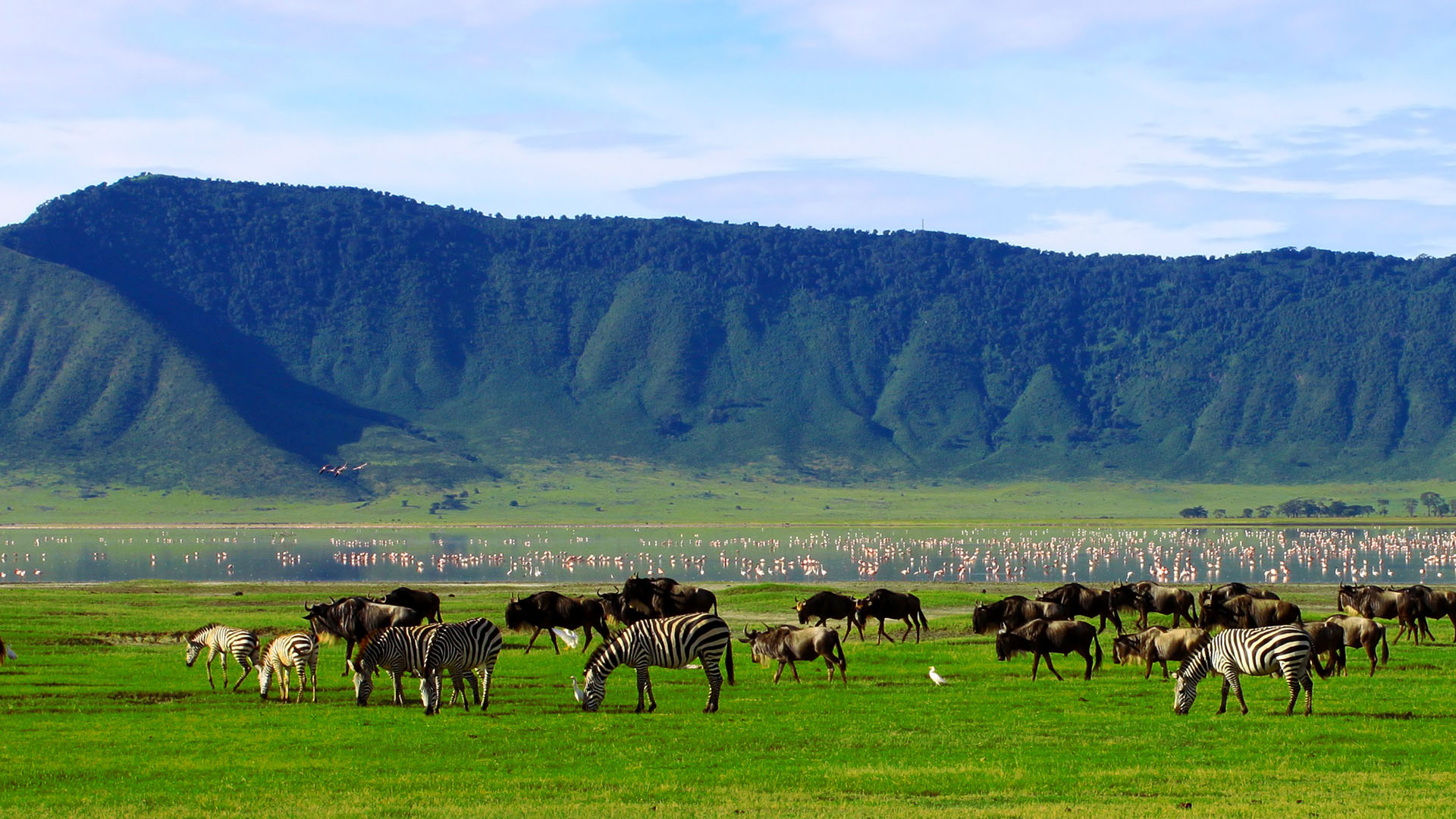
The Great Migration is not a single event. It is a continuous, circular journey that never truly begins and never truly ends. The wildebeest do not migrate from point A to point B and stop. They follow a clockwise loop through the greater Serengeti and Maasai Mara ecosystem, chasing rainfall and the fresh grass that follows it. Scientists believe this behaviour is encoded over hundreds of thousands of years of evolutionary memory. The animals sense humidity in the air, changes in wind direction, and the distant scent of rain on soil. They respond accordingly.
The ecosystem they move through covers roughly 40,000 square kilometres across Tanzania and Kenya. The Serengeti National Park forms the southern and central portion of this landscape. The Maasai Mara National Reserve in Kenya forms the northern extension. Between these two protected areas, a number of private conservancies and community lands provide additional corridors that the animals use freely.
What makes the Maasai Mara leg of the migration so viscerally powerful is the Mara River. It cuts directly across the migration route. The animals must cross it. The Nile crocodiles that inhabit this river have been waiting for this moment all year. The lions, cheetahs, and hyenas on both banks understand exactly what is about to happen. And if you are there, watching from a vehicle fifty metres back from the bank, you will feel something shift inside you that is very difficult to describe to someone who has not been there.
The Migration Calendar
This is the most important planning information in this entire guide. The herds follow a predictable but weather-driven pattern. Rainfall variations can shift these timings by two to four weeks in any direction. Click each month to read the full detail.
The Mara River Crossings
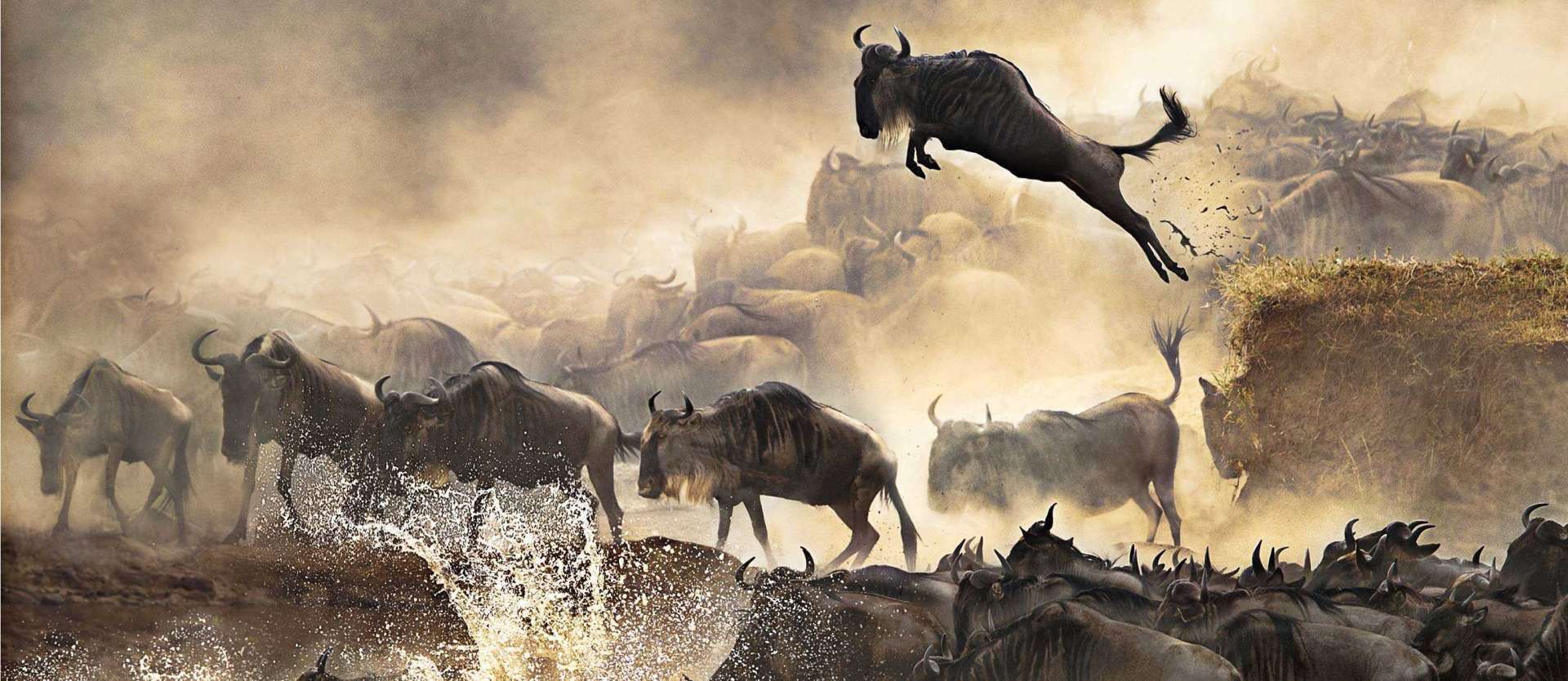
You will have watched footage of Mara River crossings on wildlife documentaries. It will not prepare you. There is a quality to being present at a crossing that film simply cannot communicate. The sound of 10,000 hooves hitting dry earth. The dusty, animal smell that hits you from 200 metres away. The peculiar stillness before the first wildebeest commits to the water. And then the moment the river erupts.
A crossing begins with uncertainty. Thousands of wildebeest mass at the riverbank, pressing against each other, churning up the soil, and staring at the water below. They can see and smell the crocodiles. They know the danger. The tension is physical. Sometimes they stand at the bank for four or five hours before anything happens. Sometimes a single wildebeest steps forward and the entire mass follows within seconds.
When the crossing begins in earnest, it is overwhelming. Animals pile into the water from heights of three and four metres. The crocodiles, which can weigh over 400 kilograms, explode from the water with a speed that is genuinely shocking. Lions on the far bank take the animals that make it across. Hyenas and jackals work the edges. Vultures descend onto anything that does not survive. The river runs brown and white and the noise is extraordinary.
"You think you understand what you are about to see. You have the photographs, the BBC footage, the descriptions from people who have been. And then the crossing begins and your brain simply stops processing it as wildlife and starts processing it as something ancient and elemental. It is not like watching animals. It is like watching a force of nature."
Guest after her first Mara crossing, August 2023
Best time of day
Most crossings happen between 07h00 and 11h00 and again from 15h00 to 17h30. Midday crossings occur but are less common. Position yourself at a likely crossing point early and wait. The wait is part of the experience.
Key crossing locations
The Purungat Bridge area, the Sand River crossing, and the crossings near Serena are the most frequently active. Your guide will monitor radio networks each morning to track where the herds are massing.
Photography advice
Use a minimum shutter speed of 1/1000 second. Set autofocus to continuous tracking. Shoot in burst mode. A 200mm to 400mm lens covers most situations. A monopod is more practical than a tripod inside a vehicle.
The patience factor
Some days you will witness three crossings. Other days the animals will retreat repeatedly without committing. This uncertainty is not a flaw in the experience. It is the experience itself. Trust your guide.
Watch the surrounding plains
While waiting for crossings, keep scanning the tree lines and open ground. Lions, cheetahs, and leopards position themselves near crossing points. Some of the finest predator sightings happen during the waiting period.
Vehicle positioning
Stay at the distance your guide recommends. Vehicles too close to the bank disturb the animals and can prevent crossings altogether. If you see guides driving aggressively close, that reflects poorly on the operator.
Wildlife Beyond the Wildebeest
The Maasai Mara is one of the finest wildlife destinations in Africa in any month. Even if the river crossings did not exist, the Mara would still be one of the best safari areas on the continent. The lion population here is among the densest anywhere in Africa. Multiple prides occupy overlapping territories across the reserve and conservancies.
Leopards are reliably found along the fig trees lining the Talek and Mara rivers. Cheetahs are seen almost daily on the open plains during migration season, hunting against a backdrop of moving herds. Elephants move through in family groups. Buffalo herds of several hundred animals are common. The river itself holds enormous hippo pods and some of the largest Nile crocodiles in Kenya.
| Species | Sighting frequency | Best time | Where to look |
|---|---|---|---|
| Lion | Daily | Dawn and dusk | Open plains, river corridors |
| Cheetah | Most days | Early morning | Open savanna, termite mounds |
| Leopard | Several times weekly | First light | Fig trees along the Talek River |
| Elephant | Daily | Morning and evening | Riverine forest, watering holes |
| Hippo | Daily | Sunrise and sunset | Mara and Talek rivers |
| Buffalo | Daily | Morning | Open grasslands and marshes |
| Hyena | Daily | Dawn and dusk | Territorial dens, near kills |
| African Wild Dog | Occasional | Dawn | Naboisho Conservancy |
Main Reserve vs Private Conservancies
This is one of the most important decisions you will make. The Maasai Mara National Reserve is magnificent but during August and September it can feel genuinely crowded at popular crossing points. Vehicle density can be high and the experience can feel more like a spectator event than a wilderness encounter.
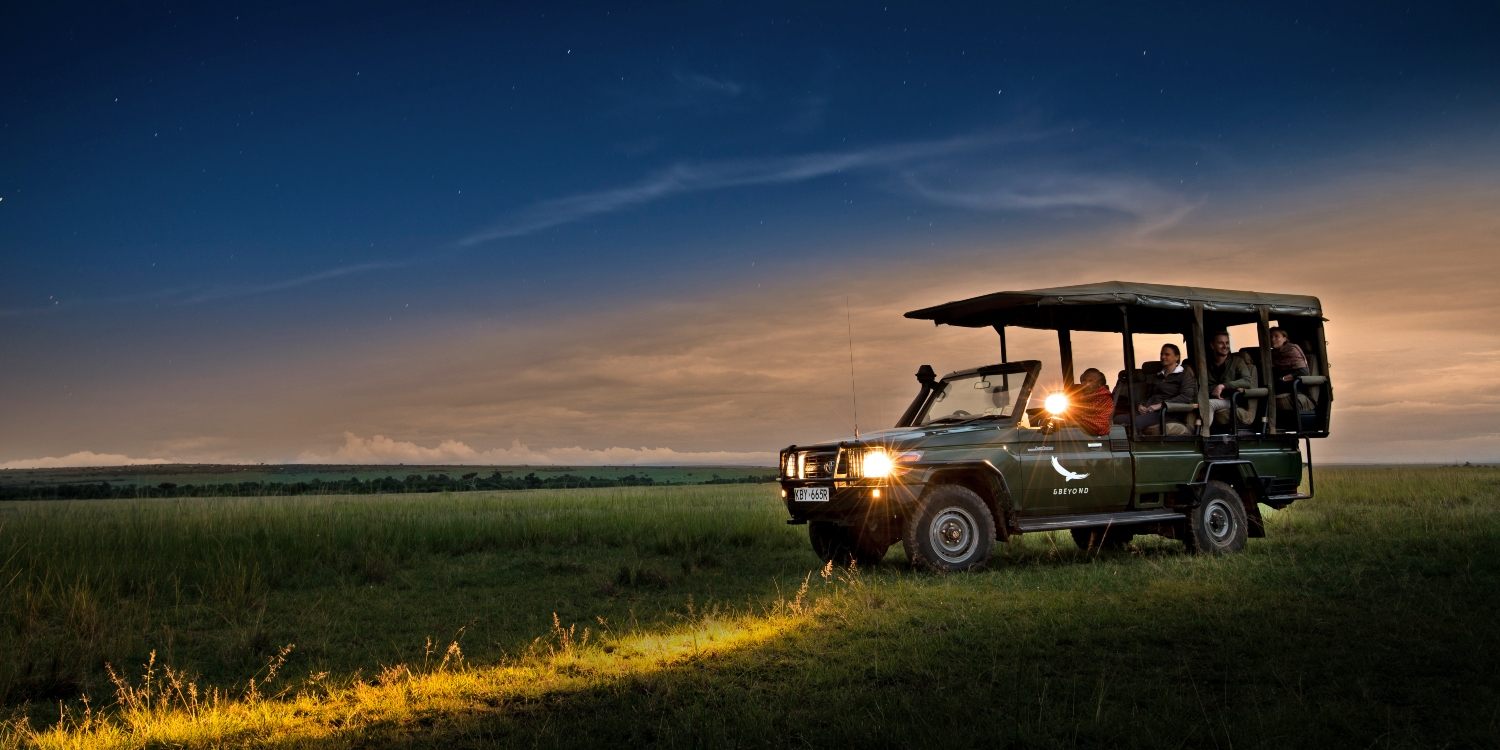
The private conservancies that border the main reserve operate on a fundamentally different model. Community landowners lease their land under agreements that cap the number of vehicles and visitors at any given time. The result is transformative. You may have a Mara River crossing entirely to yourselves. Night game drives are permitted. Walking safaris are possible. The conservancies come at a premium but that premium represents extraordinary value for the quality of experience it delivers.
Planning Tips
Book at least nine months in advance
For August and September travel, book a full year ahead. Premium conservancy camps have very limited capacity and high demand from returning clients. If you are reading this four months before your intended travel dates, do not wait any longer.
Stay in a conservancy if your budget allows
The Mara North, Naboisho, and Olare Motorogi conservancies offer low vehicle density, night drives, and walking safaris. The premium over a standard reserve lodge is significant but the quality difference is greater still.
Plan for at least five nights
River crossings do not happen on a schedule. You need enough time to let the migration come to you rather than chasing it. Seven nights gives you a genuinely unhurried experience.
Invest in an exceptional guide
The difference between a good guide and a great one is measured in exactly what you witness. A guide who knows the Mara intimately will put you at a crossing before it begins, not after. Ask your operator specifically about their guides' experience in the ecosystem.
Pack a warm layer regardless of the season
Dawn game drives in July and August at Mara's altitude can be genuinely cold. A fleece or light down jacket is not optional. You will want it at 06h00 on the open plains even in midsummer.
Bring a quality pair of binoculars
A 10x42 binocular is the single most useful piece of safari equipment after your camera. Many of the finest wildlife moments happen at a distance where the naked eye simply cannot pick up the detail. Do not underestimate this.
Frequently Asked Questions
For August and September travel, book twelve months in advance. The premium conservancy camps have very limited capacity and genuine demand. For July and October, nine months is the minimum. If you are reading this four months before peak season travel, contact us today. We will tell you what is still realistically available.
No wildlife experience can be guaranteed. The migration happens every year without exception, but specific river crossings depend on where the herds are massing on any given day. If you travel in July through October and spend at least five nights in the Mara, the probability of witnessing at least one crossing is very high. Most clients who spend a full week see multiple crossings.
Yes, absolutely. The Mara is one of the most family-friendly safari destinations in Africa. Children need to be at least six years old for game drives at most camps. The wildlife watching from a vehicle is appropriate for all ages. Children who witness the migration typically describe it as the most extraordinary experience of their lives.
We recommend a minimum of five nights in the Mara for a dedicated migration safari. Seven to ten nights transforms the experience. With a longer stay you begin to understand the rhythms of the ecosystem rather than simply collecting highlights. If you are combining the Mara with other destinations such as Amboseli or the Serengeti, allow at least ten to fourteen days total.
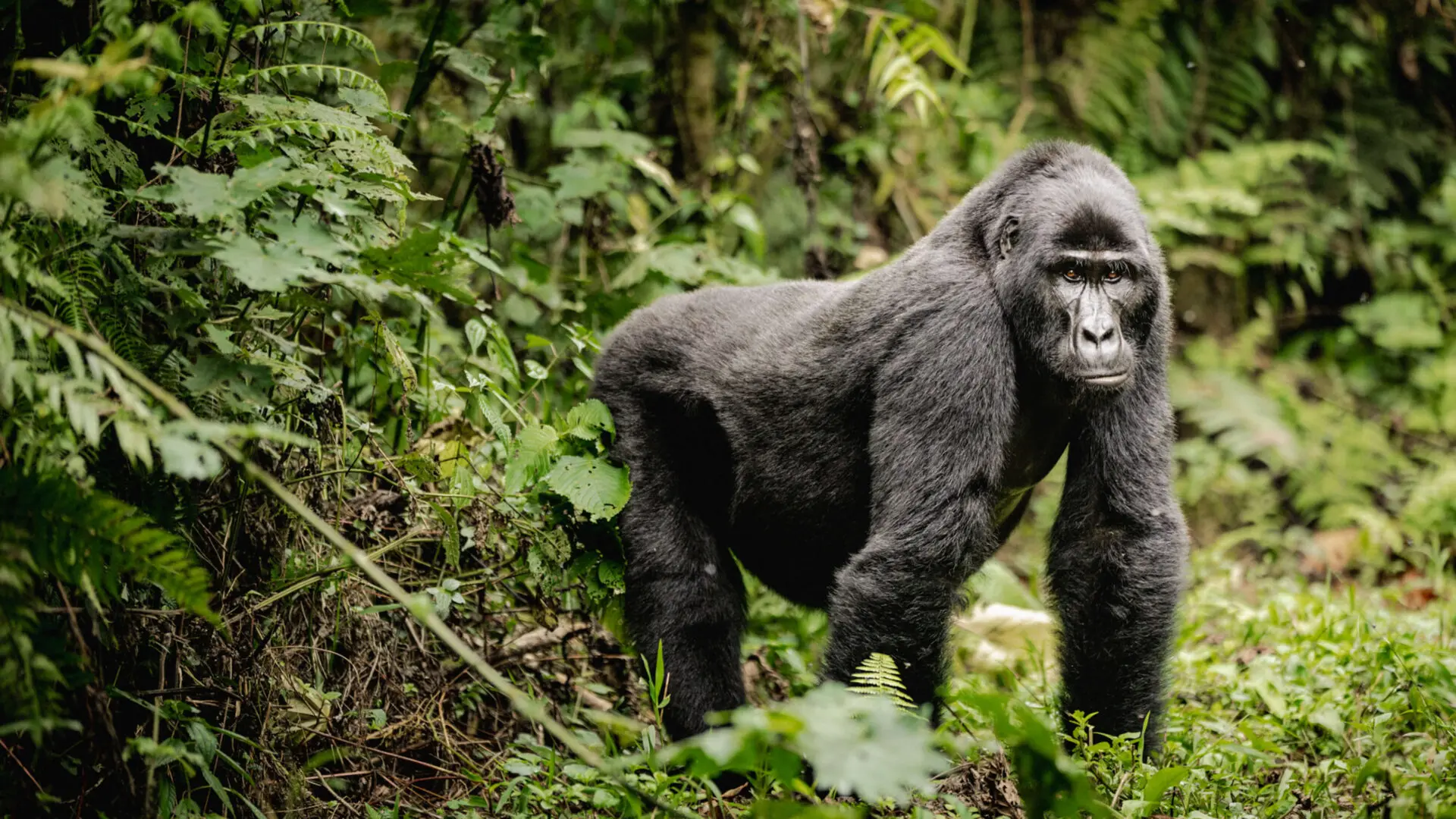
Yes, and this is one of our most popular itinerary combinations. A ten to fourteen day trip beginning with gorilla trekking in Bwindi Impenetrable Forest in Uganda and finishing with the migration in Kenya is among the finest things you can do in East Africa. The two experiences are completely different and perfectly complementary. We design these itineraries regularly.
Start Planning Your Migration Safari
The best camps for the 2025 peak season are filling now. Send us an enquiry today and we will come back to you within 24 hours with honest advice, realistic options, and a clear picture of what your migration safari can look like. No commitment required.
Ready to Experience East Africa?
Turn these stories into your own adventure. Our team is ready to plan a tailor made safari around exactly what inspires you.